How to Install a Pigeon Net on a Balcony: The Professional Method
A step-by-step look at how professionals install balcony pigeon nets — tools, hook spacing, tensioning, non-drill options and the mistakes that make a net sag.
By Perfect Bird Netting Service ·
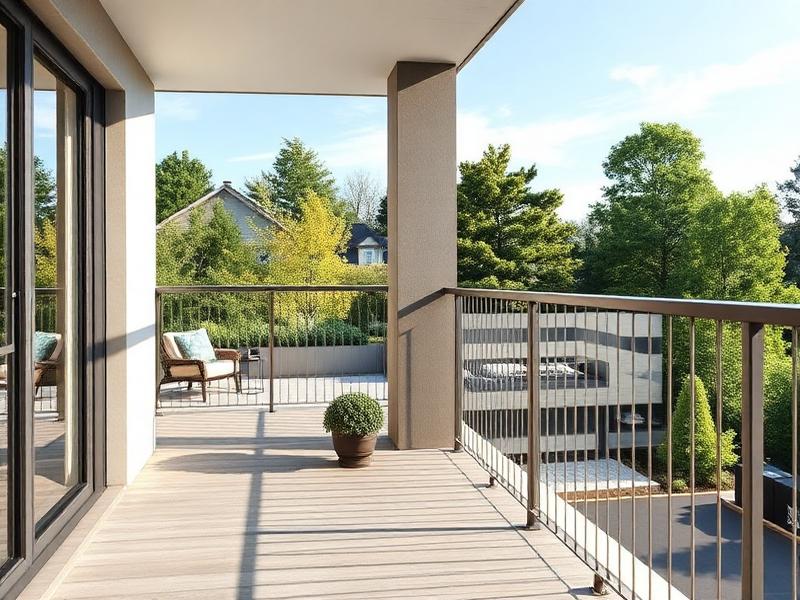
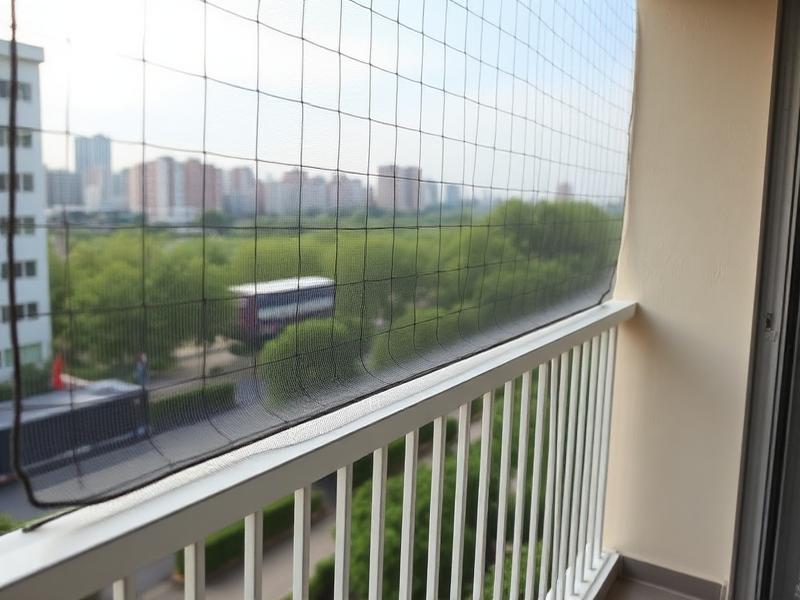
Installing a balcony pigeon net looks like stretching mesh across an opening. In practice, the mesh is the easy part — the job is decided by hook placement and wire tension. Get those two right and the net lasts a decade; get them wrong and it bellies out within a monsoon.
Here is the exact sequence a trained crew follows, so you know what to expect on installation day and what to check before signing off.
Step 1: Survey and measure
Every opening is measured — front face, side returns, AC ledge and duct — and the substrate is checked. RCC beam faces take expansion hooks well; brick infill and lightweight block do not, and hook lines are shifted onto structural concrete instead. This is also when access is decided: ladder, scaffold or rope.
The measurement determines the price, which is why we do it in person. See how the number is built in pigeon net price per square feet.
Step 2: Clean and disinfect first
Drilling into a ledge caked with droppings aerosolises dried faecal dust — a genuine respiratory risk, not a cosmetic issue. Existing nests and droppings are removed, the surface is disinfected and allowed to dry before any hardware goes in. The health case for this step is in why pigeon droppings are a real health hazard.
Step 3: Mark and drill the hook line
| Parameter | Professional standard | Common shortcut |
|---|---|---|
| Hook spacing | 12–18 inches | 24–36 inches |
| Hook type | SS 304 expansion hook | Plastic wall plug + screw |
| Drill depth | 45–55 mm into RCC | 25 mm, into plaster |
| Corner treatment | Doubled hooks at every corner | Single hook |
Wide hook spacing is the single most common cause of a scalloped, wavy net edge. Each gap between hooks becomes a bulge under wind load, and the bulges concentrate stress on the hooks that remain.
Step 4: Run and tension the perimeter wire
A 1.6–2 mm SS 304 wire is threaded through every hook around the full perimeter and tensioned with a turnbuckle or manual pull until it rings when tapped. This wire, not the mesh, carries the load. Galvanised wire is cheaper and will bleed rust stains down a light-coloured facade within one monsoon.
Intermediate cables on wide spans
Any span over roughly twelve feet gets an intermediate horizontal cable to break the free area. Without it, the middle of the net moves like a sail. The same principle scales up to industrial work — see warehouse bird netting.
Step 5: Lace the mesh
The net is offered up, aligned square to the opening, and laced to the perimeter wire with UV nylon cord at roughly six-inch intervals. Lacing — not zip ties, not staples — lets the net be re-tensioned later and prevents the mesh lifting off the wire in a gust. Cut edges are heat-sealed so they cannot unravel.
Step 6: Tension, trim and hand over
- Check the net is drum-tight with no scallops between hooks.
- Confirm there is no gap at the AC pipe penetration — pigeons need only a fist-sized hole.
- Verify the bottom edge is closed against the parapet, not floating above it.
- Remove all drilling debris and offcuts.
- Walk the owner around the perimeter and record the warranty on the invoice.
Non-drill options for rented flats
Where drilling is not permitted, the perimeter is carried on clamp brackets that grip the parapet or on a tensioned frame set between the soffit and the parapet. It works well on standard rectangular balconies with a solid parapet, and less well on glass railings or curved edges. Load capacity is lower than a drilled installation, so clamp fixing is not used for child or pet safety netting — those must be structurally anchored. Details in child safety nets for high-rise balconies.
Should you DIY it?
| Factor | DIY kit | Professional install |
|---|---|---|
| Material cost | ₹4–₹6 / sq ft | Included |
| Hardware grade | Usually plastic plugs | SS 304 expansion hooks |
| Tensioning | By hand — typically inadequate | Turnbuckle to spec |
| Working at height | Owner's risk | Trained crew, harnessed |
| Warranty | None | Written, typically 5 years |
A ground-floor window is a reasonable DIY job. Anything above the second floor is not — the cost saving is a few hundred rupees against a fall risk and a net that will need redoing.
A net is only as good as the weakest hook in the line.
How long the job takes
| Job | Crew | Duration |
|---|---|---|
| Single balcony, up to 4th floor | 2 technicians | 60–120 minutes |
| Single balcony, high floor with rope access | 3 technicians | 2–4 hours |
| Full flat (3 openings) | 2 technicians | Half day |
| Tower wing, 20+ flats | Scheduled crew | Floor-by-floor over days |
Conclusion
Hook grade, hook spacing and wire tension are the whole job. When you inspect a finished installation, ignore the mesh and run your hand along the perimeter — if it is tight, square and evenly hooked, you have a ten-year net.
Our crews install across Indore, Bhopal, Jabalpur, Raipur and PAN India, usually within 24–48 hours of the free inspection. Book an inspection or read about our process and materials.
Frequently asked
How long does pigeon net installation take?
A standard balcony takes 60 to 120 minutes with a two-person crew. High-floor work needing rope access takes two to four hours, and a full flat with three openings is a half-day job.
Does installing a pigeon net damage the wall?
Hooks are drilled into the concrete beam or column face at 45–55 mm, leaving a small hole that is patched if the net is ever removed. Non-drill clamp fixing is available where the parapet allows it.
Can I install a pigeon net myself?
Only realistically at ground or first-floor level. Above that, working at height plus the need for proper tensioning and stainless expansion hooks makes DIY both risky and short-lived.
What hook spacing should a pigeon net use?
Twelve to eighteen inches, with doubled hooks at every corner. Wider spacing creates scalloped bulges that concentrate wind load and pull hooks out.
Our services in Indore
Every installation below is fitted by our own Indore crew, with a free site inspection and written warranty.
Get a free site inspection
Share a photo of your opening and we'll send a written per-sq-ft quote the same day.
Chat on WhatsApp